WhatsApp, one of the world's most popular messaging services, has witnessed remarkable growth in recent years. People of all ages and backgrounds use this platform to connect with friends, family, and increasingly, with businesses as well. Therefore, many B2C companies are already using WhatsApp in retail to improve customer loyalty.
Currently, WhatsApp has established itself as one of the most widely used messaging platforms globally, boasting over 2 billion users and becoming an indispensable tool for everyday communication.
WhatsApp Usage Worldwide
According to the 2022 Digital Report by Data Reportal, 25.3% of the global population regularly use this application. However, as we see in the following image, its distribution is not uniform, with Latin America, Europe, and countries like Russia and India standing out, where WhatsApp reigns as the most widely used instant messaging app. Meanwhile, in America, Asia and Australia currently prevail other messaging services.
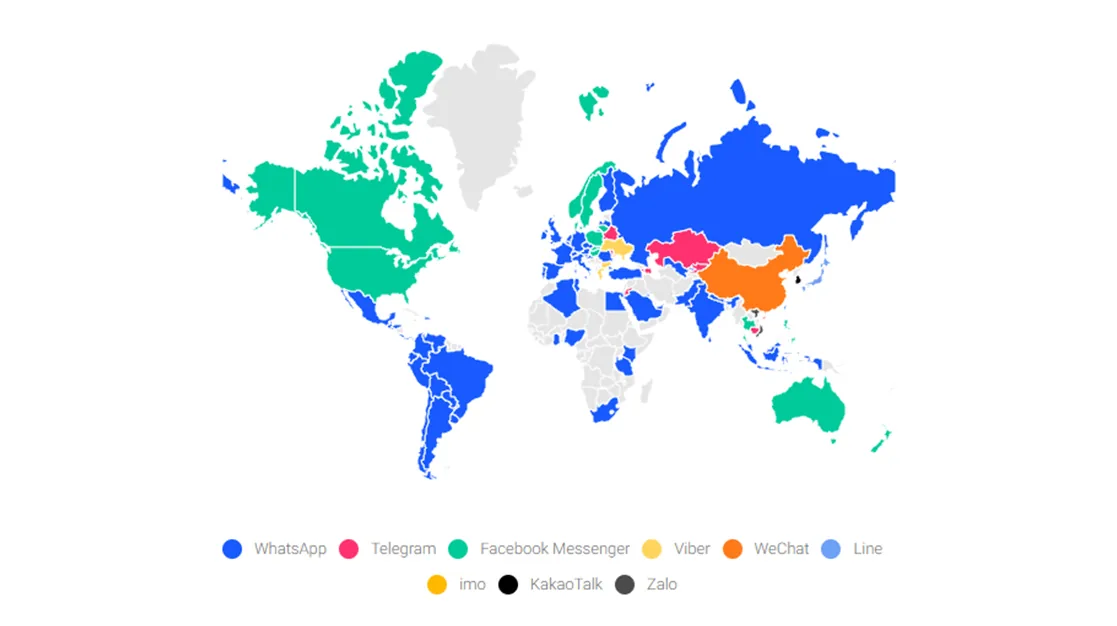
Most Popular Messaging Apps Worldwide. Android app data, April 2022, Similarweb.
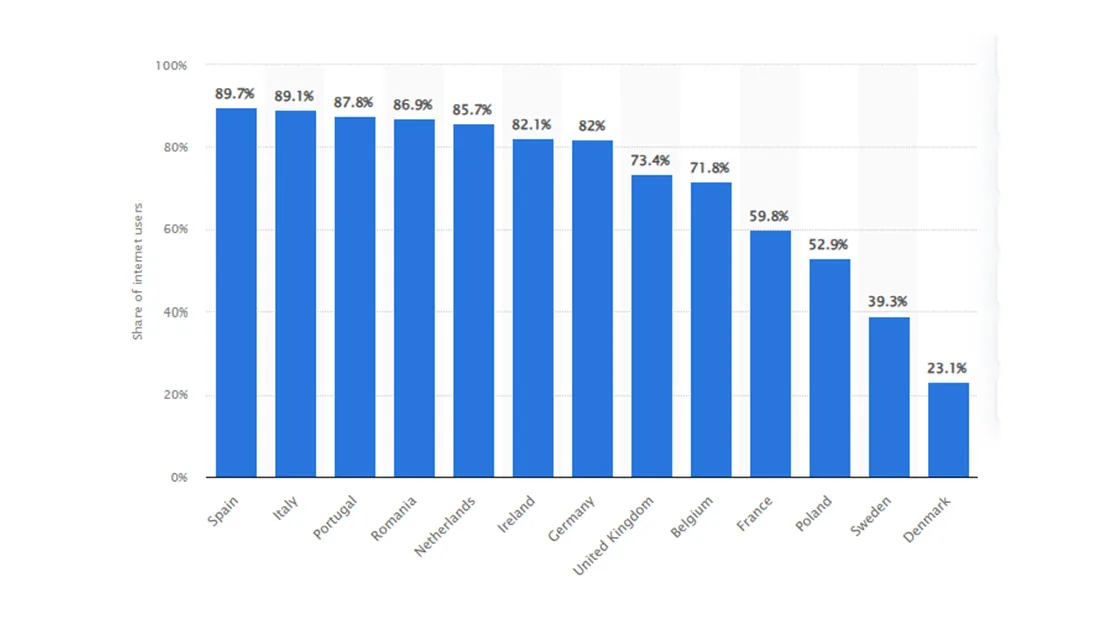
As it can be noticed in the graphic below, if we analyze Europe: Spain, Italy and Portugal clearly lead the list with impressive penetration rates. Spain particularly, steal the show (stand out) with a remarkable usage rate of 89.9%, underscoring the omnipresence of WhatsApp in the daily lives of Spanish people. WhatsApp penetration rate in selected European countries in 3rd quarter 2022, Statista 2024.
B2C Adjustment
Meta, the owner of WhatsApp, realized that a service designed for person-to-person communication could also facilitate communication between businesses and users. As the most adopted means of communication among individuals, it made sense for businesses to leverage WhatsApp for interacting with their customers. Originally, the first operations for businesses were developed under the BSP scheme and with WhatsApp Business to facilitate business-to-customer interaction from customer service departments. However, Nowadays, thanks to Meta’s flexibility in granting access to the new integration APIs, many companies perceive the potential in this tool to enhance not only customer service but also communication and even the purchasing experience of their customers. One sector where this becomes particularly relevant is retail, where WhatsApp in retail is achieving popularity day by day, enabling brands to optimize communication processes and create memorable purchase experiences for customers—a crucial element in establishing long-term relationships. Wapping, a Customer Intelligence and Loyalty platform for retail, was a pioneer in natively integrating WhatsApp. This native connection allows viewing WhatsApp as an additional communication channel with the customer, directly integrated with customer data, segmentation, and communication orchestration features. The user interacts with the brand's verified WhatsApp, grounding a direct brand-customer connection with multiple value-added services.

Which features does Wapping offer on WhatsApp?
- Communication Dispatch: WhatsApp is configured on the Wapping platform as an additional communication channel. Just as the tool enables the triggering of communications through email, SMS, Push, and in-app, it also allows to send notifications via WhatsApp. These communications can be of two types:
- Automatically triggered by the platform based on personalized events around the customer; a new promotion assigned to a customer, the user reaches milestones to obtain a specific reward, and the sending of the digital purchase receipt.
- User-initiated campaigns for segmented communications.
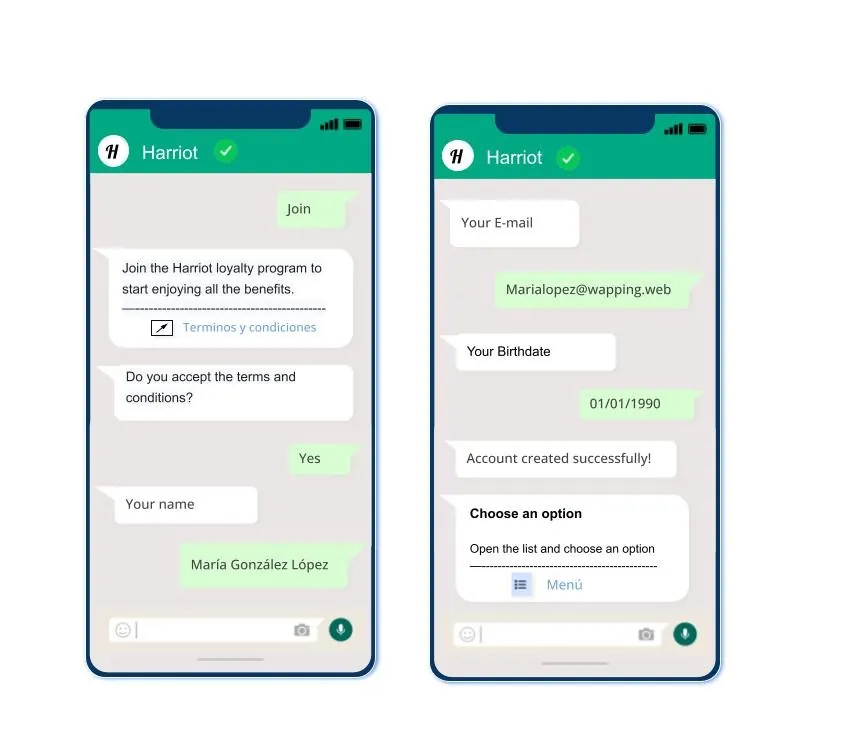
- User registration in the brand: with WhatsApp, Wapping provides brands with the opportunity for their users to register through a simple and direct procedure, in a flow where the customer expressly accepts the terms and conditions to ensure compliance and GDPR traceability. To start the registration procedure, customers must scan a QR code, and they will be redirected directly to the company’s WhatsApp chat. After completing the registration procedure, the customer is validated as in the Wapping platform, and from that point onward, becomes, in all respects for the brand, a user with access to the services offered in its loyalty program built on Wapping. This is a quick and easy process that can be achieved in seconds. In the picture below, it can be seen an example of a WhatsApp conversation regarding a loyalty registration program.
- Access to Customer Service Portfolio: With a simple click, the user can, from the brand's WhatsApp chat, check and manage all the services the brand offers them as a registered user or member of its loyalty program: check the balance, activate payment with accumulated points/savings, consult and activate/deactivate promotions, gift cards, subscription cards, electronic store and online receipts, etc.
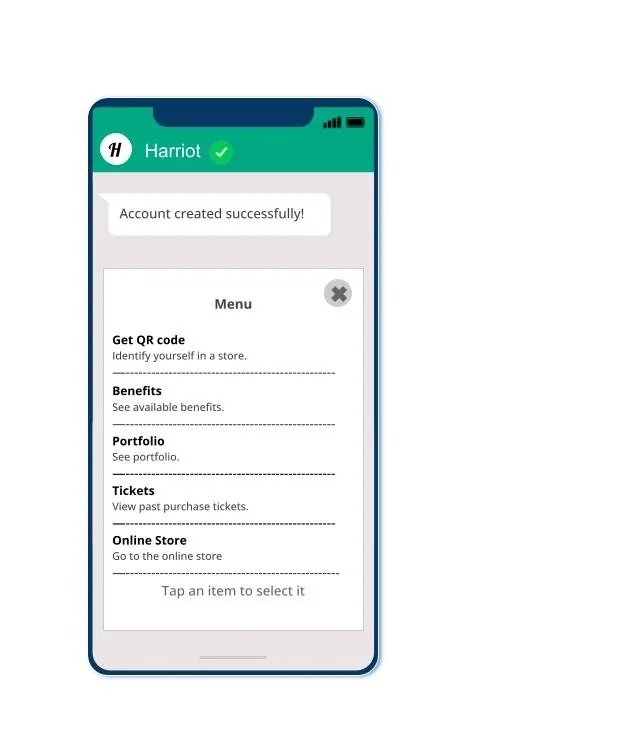
- In-Store Identification: Users can request a QR code from the menu in the brands chat on WhatsApp to identify themselves in-store and apply all their services and benefits in the purchase: accumulation/redeeming of savings, application of promotions, payments with gift cards, all in a seamless, agile, and prompt process."
- Service Flow for the customers: Wapping allows the scheduling of additional flows to enable the user to access other services: appointment booking, fitting room reservation, item stock check, and more...
Directly from the same chat, customers can open a list of the service they need, and they will be directed to the desired page, as it is shown in the picture below.
Why WhatsApp should be integrated with the customer management and loyalty tool?
Most existing customer loyalty solutions rely on a combination of applications with varying degrees of integration with ERPs, stores, and e-commerce platforms, often combined with the client’s own developments. This leads to costly onboarding, maintenance, and operation, hindering the evolution of services offered to customers.
WhatsApp, like Mobile Passes (on iOS/Android Wallet) or other customer communication methods, must be natively integrated with the omnichannel customer information management platform, especially if it's the tool that possesses reliable customer information, as is the case with Wapping. This ensures smooth operation, continuous evolution, and straightforward operations for marketing/loyalty/customer experience/omnichannel teams in analytics, segmentation, and customization of actions, campaigns, and services.
Requirements for a WhatsApp provider
From our perspective, a good technological partner to implement your WhatsApp solution for customer communication in the marketing and services domain should:
- View WhatsApp not as an isolated piece to be added to the puzzle but as part of a whole that encompasses customer intelligence, activation, and loyalty in an environment with multiple communication channels and different sales channels.
- Have proven technical expertise in the development of open, interoperable, and scalable technology.
- Prioritize innovation to stay at the forefront of research and development, providing additional value and differentiation to the market.