The digital transformation of retail has driven new ways of interaction between brands and consumers. In this context, Virtual Reality (VR) is emerging as a key technology to enhance the shopping experience, product presentation, and customer journey personalization.
VR enables the creation of virtual shopping environments where customers can explore products, receive assistance, and personalize their experience in an immersive way. More and more retailers are adopting this technology to offer interactive walkthroughs, reduce purchasing friction, and boost the value of their digital channels.
What Virtual Reality Brings to the Retail Environment
This technology, when applied to retail, allows for the design of interactive experiences that go beyond traditional web navigation. Instead of displaying static images or product listings, customers can walk through a virtual space, view items from different angles, try combinations, or receive automated assistance while exploring. This type of experience offers several key advantages:
- Increased dwell time: immersive environments capture more attention and reduce bounce rates.
- Improved brand recall: active interaction enhances the memorability of the experience.
- Higher conversion rates: simulation reduces uncertainty before purchase and can drive decision-making.
Practical Applications of VR in Retail
The use cases are broad and adaptable to different areas within retail. Some common examples include:
Virtual Showrooms
They offer the ability to recreate a full store in a digital format. Customers can freely navigate the space, get closer to products, explore details, compare options, or add directly to their cart. This environment is ideal for launching new collections, showcasing premium brands, or displaying extensive catalogs where physical space is limited.
Virtual Fitting Rooms
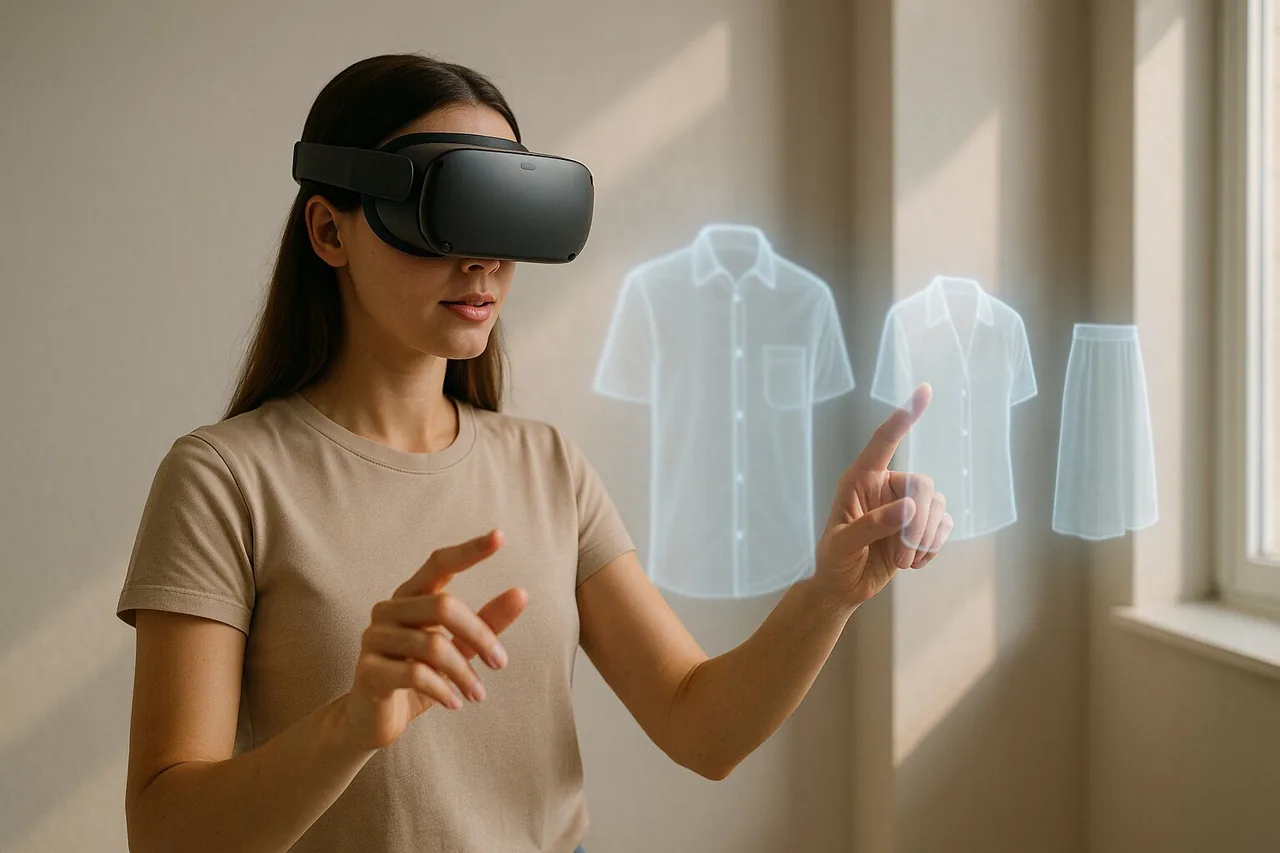
Widely used in fashion, footwear, and accessories, these systems allow customers to see themselves wearing different items using body scanning technologies or augmented reality. While some formats require specific devices, many now work directly from the browser or an app, making them much more accessible. For customers, it’s a fast and convenient way to check fit without physical trials.
In-Context Product Visualization
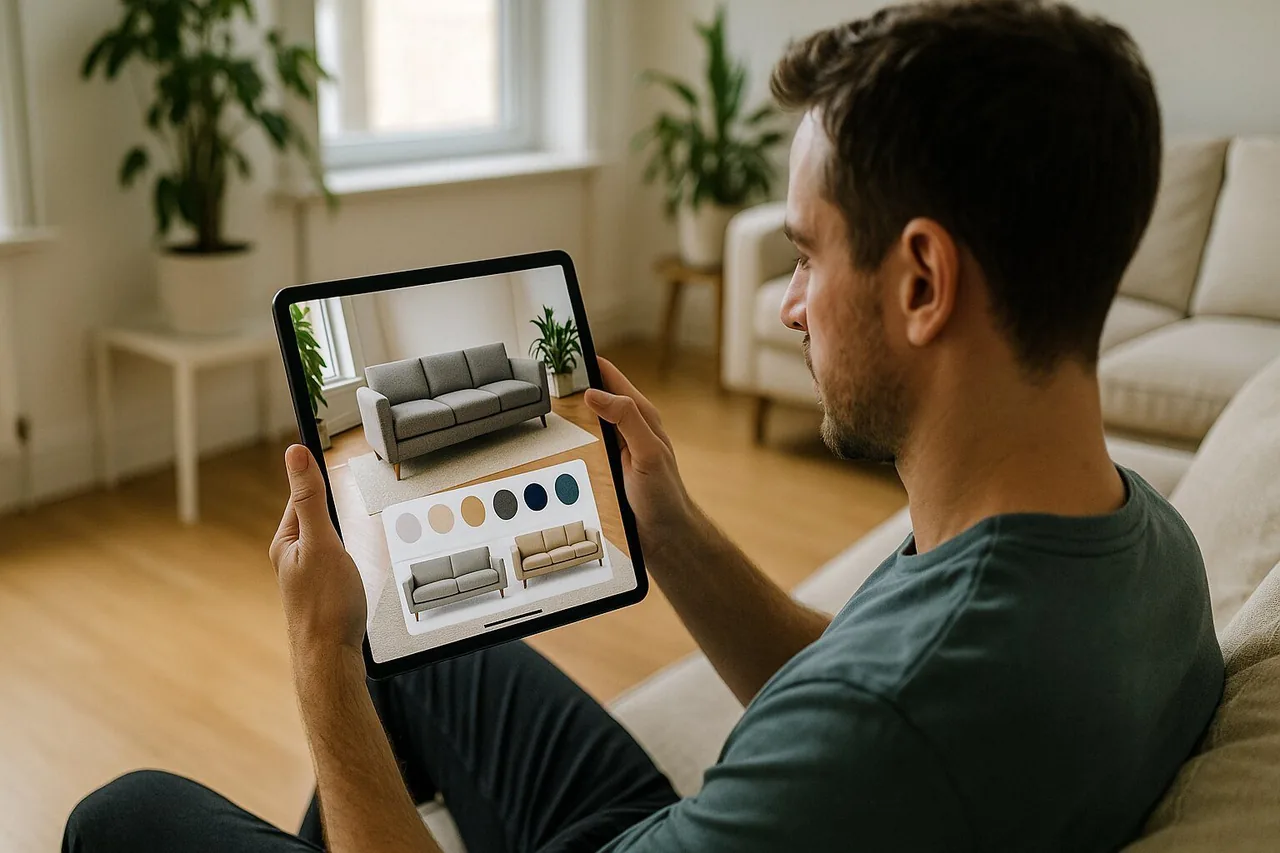
Sectors like home decor, furniture, and DIY are benefiting greatly from VR, helping customers visualize how a product would look in their own space. For example, placing a sofa in their living room, seeing how lighting changes a room, or simulating furniture assembly. This not only enhances the experience but also reduces doubts, errors, and returns.
Events, Launches, or Temporary Spaces
One of VR’s biggest strengths is its ability to create unique spaces without physical limitations. Many brands are using it for limited-time campaigns, special promotions, or even private events for loyal customers. With proper execution, it’s possible to generate high-impact visuals without the logistics costs of an in-person action.
Integration with an Omnichannel Strategy
For VR to deliver real results, it must not be treated as a standalone channel. Its true potential is unlocked when it becomes part of a well-structured omnichannel strategy, where all touchpoints (physical stores, ecommerce, mobile apps, social media, or customer service) are aligned and connected. To deliver real value, VR must be connected to the retailer’s data system. This enables tracking user behavior in the virtual environment and using that data to personalize future actions. At this point, solutions like Wapping are key: they centralize customer data, enable segmentation, and activate automated campaigns based on behavior.
Does it work well for mid-sized businesses?
Although for years it was seen as a technology reserved for large brands or big budgets, VR is becoming increasingly accessible to retailers of all sizes. The development of more flexible and affordable tools has significantly reduced implementation and maintenance costs.
Today, it's possible to create virtual environments from existing 3D designs, easily connect them to ecommerce catalogs, or launch temporary campaigns using modular templates. Additionally, many companies start with a pilot project in collaboration with tech partners to validate results before scaling the solution.
Conclusion
Virtual reality is no longer just a visual innovation: it’s a strategic tool to enhance experience, personalize the customer journey, and optimize processes. Integrated with platforms like Wapping, it connects data, activates automated campaigns, and creates real value in every interaction. In a market where differentiation is key, offering immersive experiences is a competitive advantage. And with Wapping, that advantage is fully operational and scalable.