Many companies invest in improving customer service and wonder why, even so, their customers do not recommend them or end up going to the competition. The answer, almost always, is that they have confused customer service with customer experience.
They are related concepts, but they are not the same. And understanding the difference can completely change the way you design your customer loyalty strategy.
In this post, we explain what each one is, how they differ and, above all, how to work on both to build long-lasting relationships with your customers.
What is customer experience?
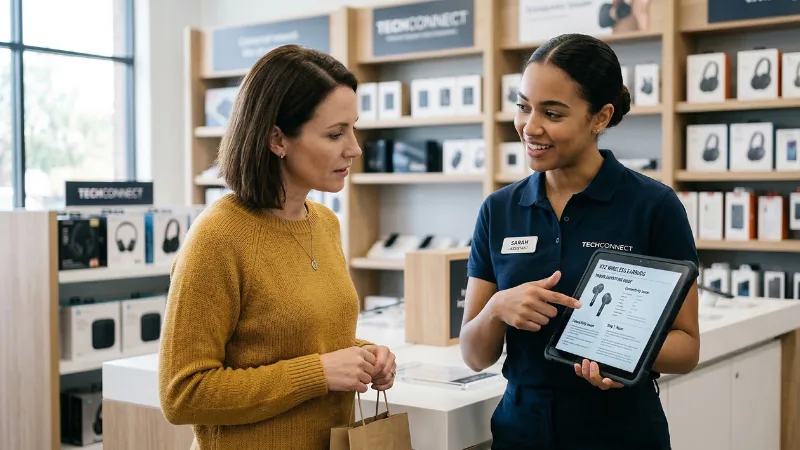
Customer experience, or CX, is the overall perception a customer builds about your brand through all the interactions they have with it. It is not a specific moment: it is the sum of everything.
From the first ad they see to how you handle a return. From how easy it is to navigate your website to whether the store assistant remembers them from their last visit.
The key point is: customer experience happens whether you actively manage it or not. If you do not design it, randomness will.
What is customer service?
Customer service is part of the experience, not the whole of it. It is the set of support interactions you offer when the customer needs help: resolving a question, handling an issue, or managing a complaint.
Good customer service is necessary, but not sufficient. You can have the best support team in your industry and still deliver a mediocre experience if your purchasing process is confusing, your communications are impersonal, or the customer has to repeat their information every time they contact you.
Customer service solves problems. Customer experience prevents them.
Customer service vs. customer experience: Key differences.
| Customer service | Customer experience | |
| What is it? | A specific support interaction | The overall perception the customer has of your brand |
| When does it happen? | When there is a problem or a question | At every touchpoint, all the time |
| Who manages it? | Customer support team | The entire organization |
| What does it measure? | Response time, CSAT, resolution | NPS, CLV, retention, overall satisfaction |
| Impact on loyalty | Indirect: prevents customer loss | Direct: builds loyalty and advocacy |
The difference is not only conceptual. It has a direct impact on metrics such as retention, CLV or NPS, and on business profitability in the medium and long term.
Why does a great customer experience drive loyalty more than any discount?
There is a widespread belief in retail: that customers stay because of price. Data says otherwise.
Customers leave brands after accumulating negative experiences, even if prices are competitive. And they remain loyal to brands that make them feel well attended, recognized, and valued, even when they are not the cheapest.
Why? Because discounts appeal to reason. Experience appeals to emotion. And in retail, purchase decisions carry a much stronger emotional component than we usually acknowledge.
A strong customer experience generates:
- Higher retention: satisfied customers are far less likely to switch to competitors.
- Higher purchase frequency: a customer who enjoys the buying experience returns more often, even without financial incentives.
- Higher average order value: trust reduces friction in decision-making and enables cross-selling.
- Organic advocacy: customers with excellent experiences recommend the brand without being asked.
- Lower price sensitivity: the perceived value of the experience offsets differences versus competitors.
Customer experience: Practical examples in retail.
To understand the difference in practice, here are some common retail scenarios:
The customer who has to do your job
A customer looks for a specific size, cannot find it in-store, asks an employee, the employee checks the stockroom, there is no stock, and suggests calling another store. The customer travels, finds it, and buys it.
The service was correct. But a good customer experience would have allowed the customer to check stock from their phone, reserve the item, or have it delivered home. The difference lies in whether the customer adapts to the brand or the brand adapts to the customer.
The communication that arrives too late
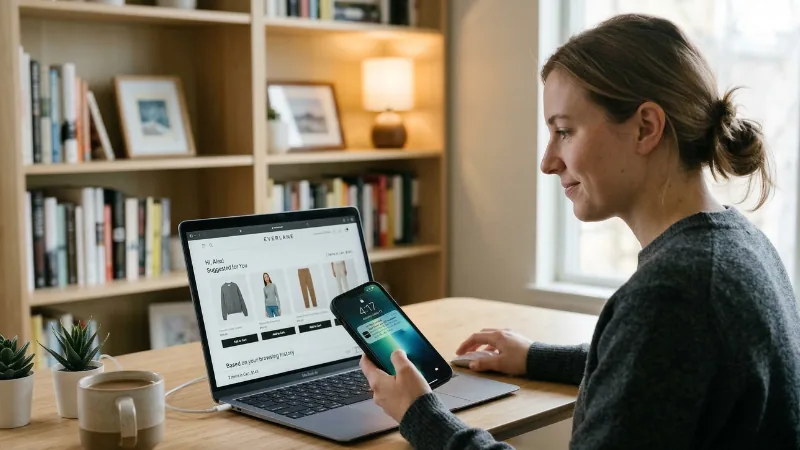
A customer buys a product online and 48 hours later receives an email with a discount for that same item. The communication is category-personalized and well designed. But it arrives too late and creates the feeling that the brand does not know what the customer has just done.
This happens when purchase data is not unified in real time and communication systems operate in silos. The service did not fail: the overall experience created friction.
Recognition that does not need a discount
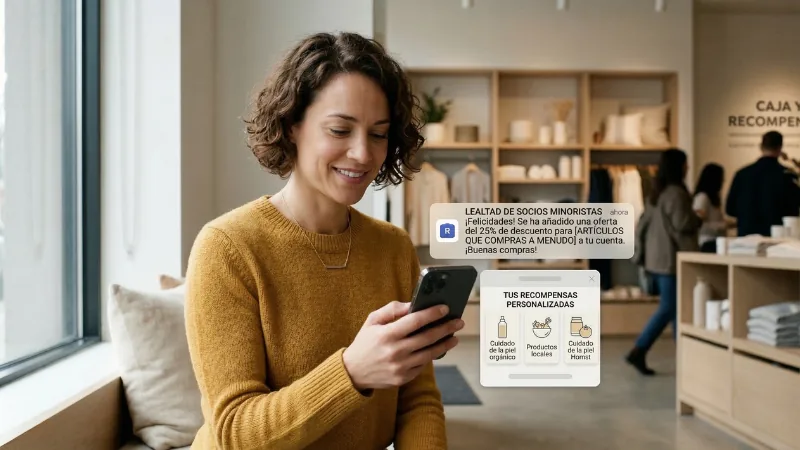
A loyal customer receives, before their birthday, a message that acknowledges their tenure, offers a benefit linked to the products they usually buy, and gives them early access to a relevant promotion.
There is no mass discount. No generic incentive. There is recognition, relevance, and timing. The customer feels known and valued. That is customer experience that drives loyalty.
How to build a strong customer experience in omnichannel retail.
Improving customer experience is not a customer service project: it is a strategic decision that impacts the entire organization. These are the key pillars:
Real customer understanding
It is not possible to deliver a great experience without knowing your customer. This means unifying all interaction data: in-store purchases, online history, campaign responses, preferences, into a single, real-time updated profile.
A CDP platform like Wapping enables you to build this omnichannel profile with a unique customer ID, eliminating duplicates and ensuring every action is based on complete and reliable data.
Consistency across all channels
Customers do not distinguish between channels. For them, the brand is one—whether in-store, on the website, or in the app. An excellent experience is consistent and frictionless across all touchpoints.
Purchase history, loyalty points, preferences, and the status of any interaction must be available across all channels instantly.
True personalization
Adding a customer’s name in an email subject line is not personalization. Personalization means delivering an experience genuinely adapted to their preferences, behavior, and stage in the customer lifecycle.
This requires dynamic segmentation based on up-to-date data, communications triggered by real events, and benefits the customer perceives as relevant to them—not to the average segment they belong to.
A loyalty program that reinforces the experience
A well-designed loyalty program is not an add-on to the experience: it is part of it. When customers feel recognized and fairly rewarded, the program becomes a differentiating factor.
Successful omnichannel retail programs operate seamlessly across channels, adapt incentives to each customer profile, and create a perception of exclusivity and personalization.
Continuous measurement
Customer experience cannot be managed without metrics. NPS, CSAT, retention rate, CLV, purchase frequency: these must be systematically measured and combined with behavioral data to identify friction points and opportunities.
Advanced analytics not only measures what happened but also anticipates behavior and enables action before at-risk customers churn.
Conclusion
Customer service and customer experience are not the same. Service solves problems. Experience builds relationships.
In a retail environment where consumers have more options than ever, investing in customer experience is not optional. It is the foundation for any sustainable growth strategy.
Excellent customer service is necessary. Excellent customer experience is what truly drives loyalty.